
COCO does the Mediterranean: Part One
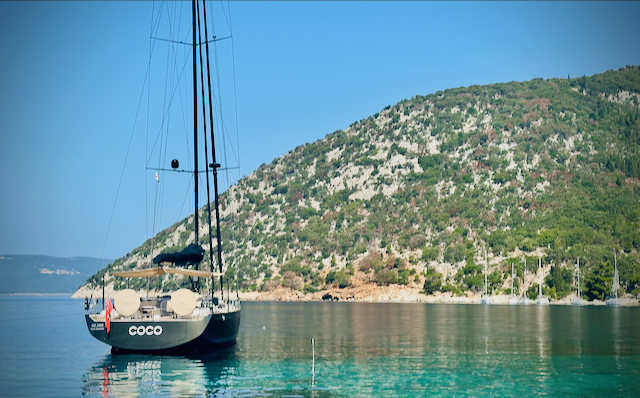
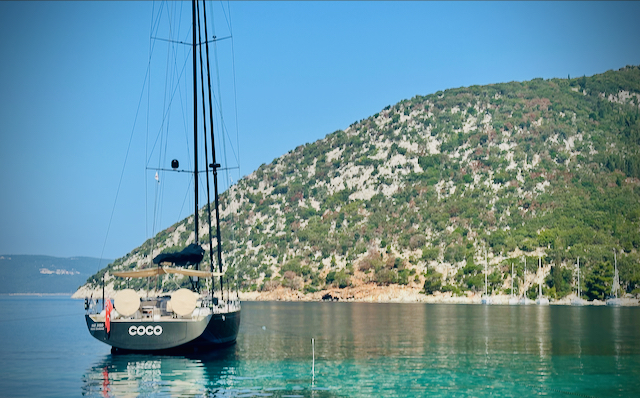
Barcelona to Italy.
Oh the curse of getting behind on your schoolwork. I started writing up our 2025 sailing season, and we did quite a bit of sailing! And realised it was turning into somewhat of an epic. In the 2025 European Summer, we’ve pretty much sailed from one side of the Med to the other. Starting in Barcelona in April, making our way all the way across to the eastern Aegean, then back to Athens in November, where COCO is spending the winter. 2,300 nautical miles, 4,250 kilometres.
So, as my fingers danced across the keyboard, reliving memories, browsing through photos; I looked at my word count and had an epiphany; there is no way any sane person is going to read the novel that had evolved. In light of this revelation, I’ll break it into a few bits for my sanity, and yours. Lesson for me, don’t get behind. Pointless, I’m reliving my school days. Always behind… In this first chapter, I’ll cover our departure from Barcelona through to the Heel of Italy.
The Golden Days of Sailing → Nothing is broken, go…
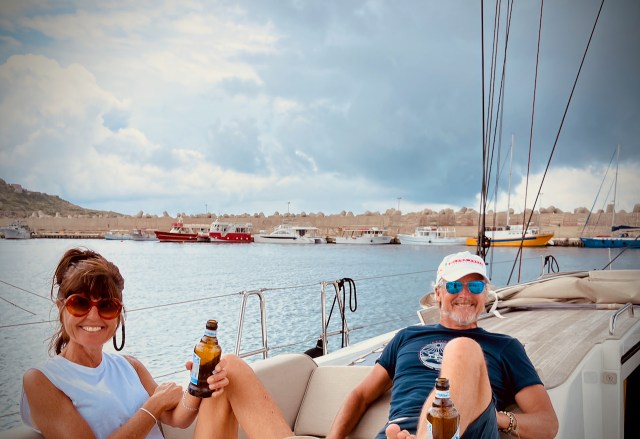
Over the years, I’ve come to the conclusion that boats are much like children, with many similarities between the behaviour of these unmanageable entities; from conception, all the way through to the joyous day that they graciously depart from your life, and quite literally, head off into the sunset.
Please keep in mind, that this conclusion, has been firmly established through real life experience across both discipline’s; yachts and children. I’m pointing this out so that as you are reading these sage thoughts spilling from my head, you’ll understand that I’m not talking out my arse. It’s all true. And there is a point to this story, please bear with me.
So, let’s talk about children. The planning for said creatures (well, in many cases, sometimes it’s a little more of a “surprise” hopefully never a “spur of the moment” decision…), can often begin years before the birth. The budgeting, the name choosing, the excitement! Where are we going to house said child, the research on how to look after the health of the new addition; etc, etc.
Then the birth. Oh my, what an exciting day. It’s the most beautiful child ever to grace the planet earth. So proud! Shortly thereafter, the realisation of what you’ve actually done. The cost, the worry, the feeling of being out of your depth… But then it gets even worse. You find out it’s faulty! It’s non-compliant, has a mind of its own, things go wrong. The worry, the sleepless nights. What have I done? Why did I do it? Who can I blame? Why isn’t this predictable and logical?
Then after about two years things start to settle down. There is some order, discipline, some predictability, you know more, you get sleep. You feel like a pro. You’ve got this! That feeling lasts for another two years. Life is good! These are what I call “The Golden Years”. I love this child. My God what a great decision to become a parent! I am fulfilled.
However, things change as the child grows older and once again, you’ve lost control; the costs start to spiral, way outside any budget you ever made. This generally happens a couple of years after the begining of the aforementioned “Golden Years”. Maintaining the child becomes expensive – food, cleaning, insurance, higher learning, transport, housing, clothing, upgrades in electronics, wardrobe – everything that is either necessary or unnecessary. There is no delineation between these things. Nothing makes sense. What have I done? Why did I do it? Who can I blame?
Now, I could at this juncture start to make a direct comparison between children and building a new yacht. But I’m not sure I need to. I think you get my point? One just stumbles forward hoping that the divorce rate for yacht owners, isn’t as high as marriage with children…
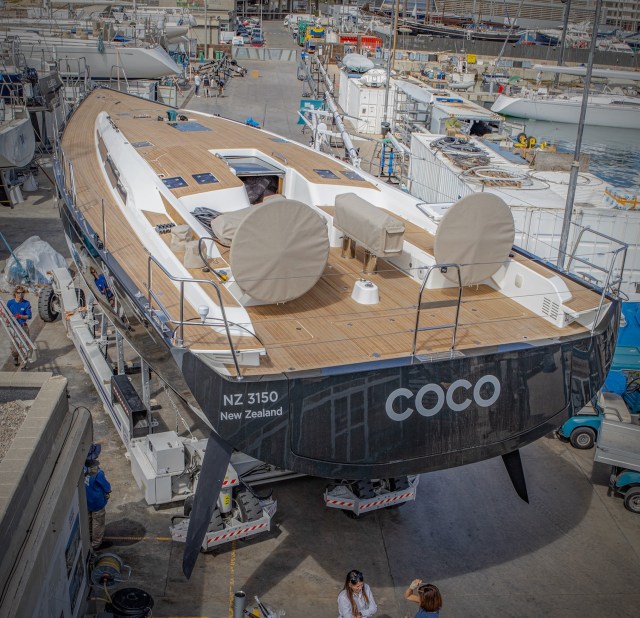
So here we are; right bang smack in the middle of the Golden Years. COCO has been a wonderful and compliant child for the whole of the 2025 Mediterranean summer. Two years after launch, we’ve finished dealing with all the teething issues, and asking those predictable questions; What have I done? Why did I do it? Who can I blame? It’s been magical. I figure we’ve got one more year before the child becomes unruly again, the expenses start to roll in, and the Golden Years are but a distant memory. So best we make the most of it!
Let me tell you all about it.
The Decision Point → You can’t sail when you’re dead
So, I was sitting on the deck at home in Queenstown New Zealand. It’s January 2025; summer. I’m soaking up the South Pacific sun wearing nothing but linen pants and a grin, sippin’ something that tasted like tequila’s better-dressed cousin, when I got the idea.
“Sail to Corfu,” I thought to myself, “or maybe even to Santorini”. Who knows. I’m sure at that moment the Mediterranean winked back at me like she knew I was coming.
Just a distant memory now. Now I find myself, back in New Zealand; it’s March 2026, and I’m reflecting on what was a cracking season. Over 4,000 kilometres of sailing and not one major mishap. No injuries, no dings in the boat, nothing broken. Legend. 18 months ago, this wasn’t even on my radar. I wasn’t long out of surgery after what I like to call “The Banana Incident “. That two weeks of pain in a morphine induced fog in a hospital in Spain wondering – a; was I going to be able to walk again (over dramatic I know, but give me some poetic license here), and b; was this the end of my sailing adventures…
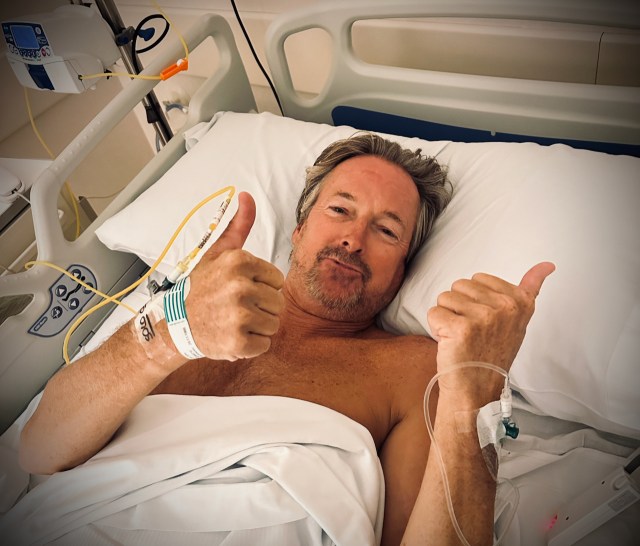
I guess if I was going to be brutally honest with myself, not something I like to do often through fear of facing reality, I think I lost my mojo. And my desire to skipper a reasonably powerful 60-foot yacht. I’d done a pretty good job on destroying the bottom end of my back and I kinda gave up on sailing, I guess. We packed up COCO, pulled her out of the water, and put her on the market. How things change…
We made the call to start sailing early in the 2025 season to miss the chaos of July and August where you’re fighting with 10,000 charter boats skippered by those who got their ticket from the back of a cereal box.
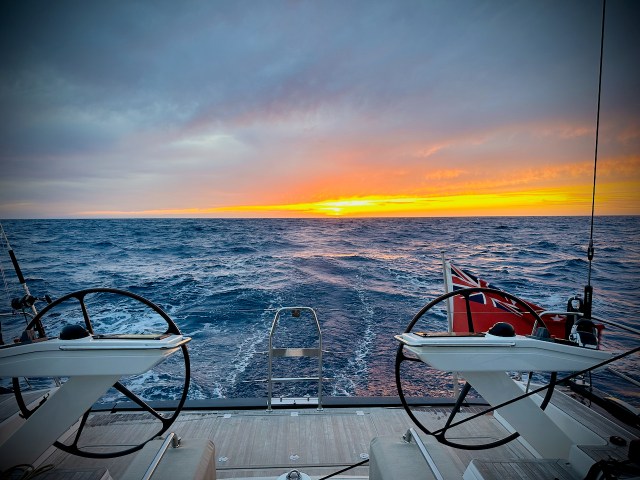
It wasn’t long before April reared its head, and I found myself sitting in a Chringuito on a beach in Barcelona sipping a Spanish beer getting COCO ready to hit the water. And instead of giving up, I got to enjoy moments like this, and others like sailing to Sardinia from Menorca in the moonlight, hoping to get there early enough in the morning to miss the blow that’s heading down from the south of France, planning to be tucked up in a bay on the south coast near Caloforte drinking red wine and eating pasta by 11am! I think I made the right choice.
Our 2025 sailing route looked something like this:
- Leg One (this sector) → Barcelona, Menorca, Sardinia, Sicily, Aeolian Islands, Strait of Messina, to the “Boot” of Italy.
- Leg Two → the Ionian; Corfu, Paxos, Kefalonia, Ithaca, Kalamos, Kastos, south to the Peloponnese Peninsula, back north to the Saronic Islands, then east to Attica (Athens peninsula).
- Leg Three → the Cyclades, then further east and before sailing north through the Dodecanese Islands (in the eastern Aegean right across on the Turkish Coast) then back to Lavrio, just south of Athens where COCO will sleep for the winter.
Moral of the story? I’m not dead yet, let’s go sailing!
So, let’s make a start and I’ll tell you about the trip; now that I’ve finished my preamble…
Badalona to Menorca → Find Lobster → Let’s Go
First, let me tell you about Badalona, because let’s face it, nobody actually knows much about it! Located about 10km north of downtown Barcelona, it’s local. And Nautor Swan Global Services have a great yard there to look after all the Med sailoring Swan’s. That’s been COCO’s home for the last couple of years. And I actually really like Badalona. It feels more like real Spain than the tourist hub of nearby Barcelona. There are some very good Catalonian restaurants like Restaurant la Llar de l’All I Oli, the local markets are epic, the Paella on the beach in something to behold at La Nècora d’Or, and the Chiringuitos lining the beach in summer are fantastic. It’s not everyone’s cuppa, but I really like its rustic local charm.
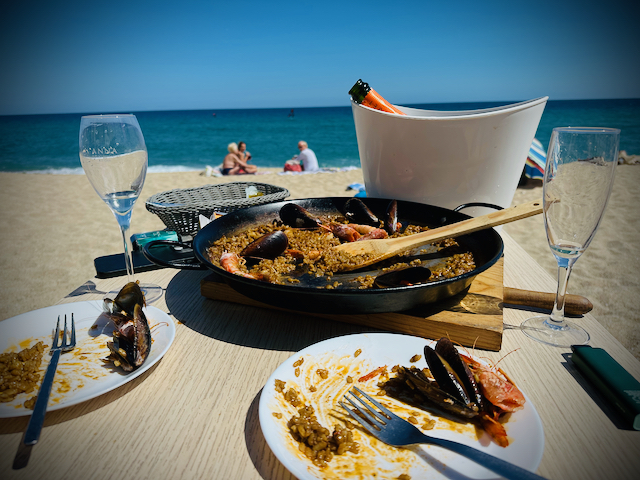
Badalona is a good jump-off point to explore the south coast of Spain, and of course, the Balearic Islands, which we did for the couple of years after COCO’s Launch. Do I really like the Balearic Islands? Kinda, but not my favourite place to sail in the Med. I need to put that comment in context; there is some great sailing in the Balearics, and the south coast of the mainland; but when I compare that to a peaceful wee island in the Greek Dodecanese (Eastern Aegean), alone in a tiny bay with a family run taverna on the beach, Greece wins… (more on that later). I love Palma on Majorca as a city; it’s fun and quite beautiful, especially the Old Town. I like the islands of Formentera and Cabrera, and I really did take a liking to the most northerly island in the group, Menorca.
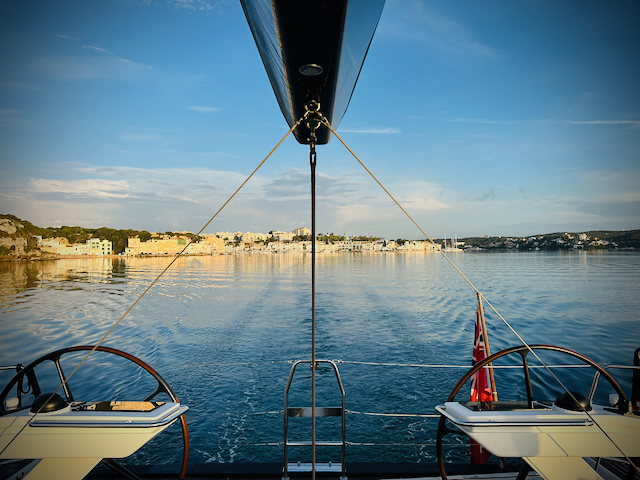
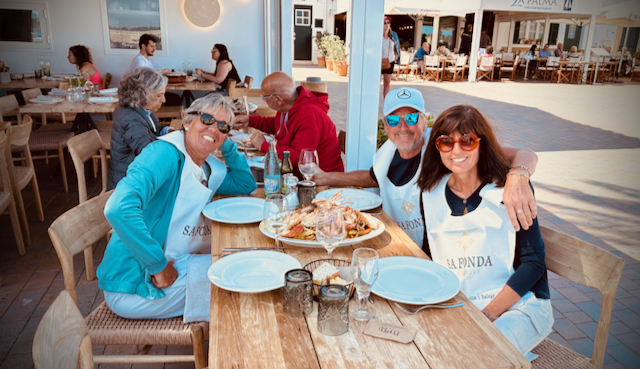
So off we went. The 2025 Sailing Adventure starts. We departed from Nautor in Badalona on the evening of April 22 with our good friend Adela from Palma, along for ride to help us get to the Ionian; we had a very pleasant light wind Genoa / Engine passage overnight to the bay of Son Saura on the south coast of Menorca. With the obligatory first swim of the season our of the way, we engaged in the much anticipated long lunch onboard to celebrate the start of the journey. Off the next morning to the beautiful port of Mahon on the south east corner of Menorca for a couple of days parked up at Marina Mahon. One of the largest natural harbours in the Med its fantastic, and very pretty. Great marina’s, well protected, and many awesome restaurants serving delicious Minorcan food (oh, and it’s got a gin distillery – bonus). And of course any trip to Menorca wouldn’t be complete with the obligatory visit to Fornells on the north coast for a long lobster lunch. Delicious. Sorry lobster, but you were worth the journey. Mahon is great – so very much worth a visit and Menorca is a great island to explore (excellent hiking for those so inclined). And they have awesome cheese…
A boy’s gotta eat → Boat food
Before we end this short story about the Spanish section of the journey, I need to share an easy boat recipe with you that our friend Neus showed us the previous year, when she and her husband Matias (they live in Palma and have a sail loft, plus they are damn good sailors and win most of the local regatta’s), and of course the aforementioned Adela, joined us on a quick 10 day jaunt down to Gibraltar and back from Palma to do the ubiquitous 18 months EU checkout so we don’t have to hand over an eye-watering cheque to the tax fiends thus maintaining our VAT unpaid status.
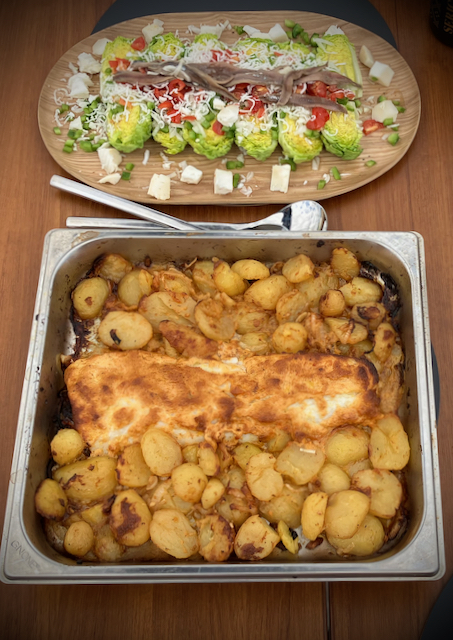
This is great, very tasty, easy to prepare meal for a hungry crew, all with Spanish supermarket ingredients. It uses salted cod, known as Bacalao, baked in the oven with some potatoes. As follows:
- A couple of large Bacalao fillets (get the ready to eat ones, not the ones you have to soak for 2 days to remove the salt – they are good, but you risk eating something that tastes like a salt pan if you don’t prepare them properly).
- Two jars of those cute little pre-cooked Spanish potatoes.
- One jar of Romesco (or Mojo Rojo if you want something with a bit more kick).
- Arrange the Bacalao fillets and potatoes in a baking dish in a single layer.
- Pour the jar of Romesco over everything.
- Grind some pepper and a bit of salt over the top.
- Put it in the oven at around 180 – 200c and bake for about 30 mins; until the fish is cooked.
- Serve straight from the pan with parsley as a garnish if you have it, and a damn fine Spanish wine
Italy → Pasta, Volcanoes, and Mild Robbery
God I love Italian food. I’m sure I’ve got some Italian blood somewhere (to the point I’m considering changing my last name – I think I will be known henceforth as Alessandro Tiramisu). And I’ve never sailed in Italian waters before; I wasn’t disappointed – well, only disappointed that I didn’t have enough time to spend longer in Italy; even though we managed to stretch what was supposed to be a 10-day trip from Mahon to Corfu into a month…
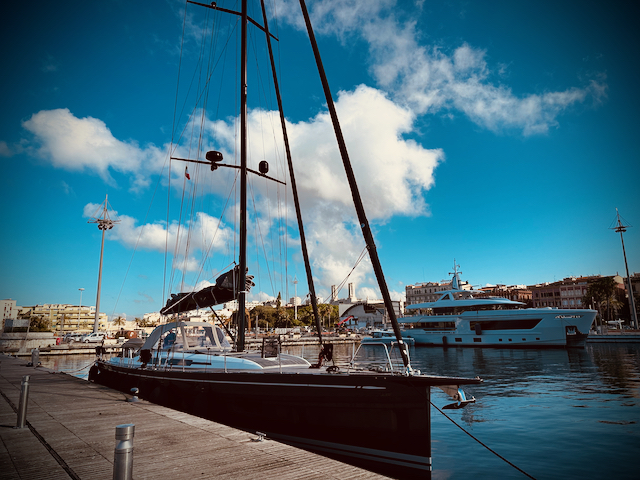
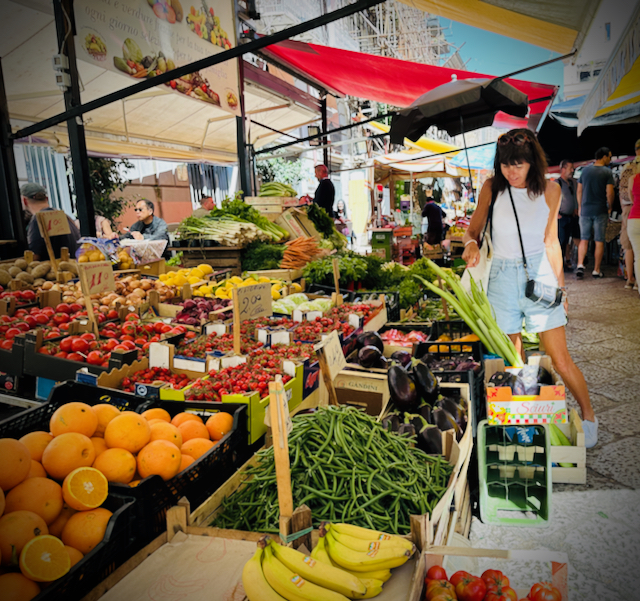
After a reasonably straight forward 26 hour sail from Mahon, we dropped anchor off the south of Sardinia at Isola di San Pietro where we spent the night before heading to Cagliari and then on to Villasimius to explore the south coast of Sardinia; far too short, but enough time to eat some great Italian food and make some modifications to our anchor retrieval system (and to decide that I’m definitely going back), Before heading to the north coast of Sicily. First stop, Palermo. What a great town. The marina (Sitimar) is located in the downtown area making it a great base to explore this city.
The history of Palermo is a bit of a wild ride – think wars, royal weddings, and all the drama of a prime-time soap opera. From ancient sea traders to modern Italy, the history of Palermo is a rollercoaster…
So, in brief-ish (there always has to be a history lesson somewhere in my prose) here you go…
About 2,800 years ago, the Phoenicians sail into Sicily and drop anchor in what we now call Palermo. Now these guys weren’t exactly amateurs. They’re trading like Wall Street with sails, getting rich, building ports, inventing the first proper alphabet on the side… and quietly turning Palermo into the Mediterranean’s version of Manhattan.
Life’s good. Then about 500 years later, the Roman Empire rolls in. And the Romans don’t just conquer places — they redecorate them. They turn Palermo into Rome 2.0. Roads everywhere, fancy water systems, baths, massive buildings. Latin becomes the cool language. The city gets a facelift so good even modern developers would take notes.
But empires, like beach umbrellas, don’t stay up forever.
Around 1,600 years ago Rome starts wobbling, and in come the Ostrogoths and the Vandals. Yes – those Vandals. The guys who trashed Rome so badly we literally named bad behaviour after them. Things were peachy for the Vandals until 1,400 years ago; the Byzantine Empire arrives, trying to reclaim the old Roman territories. They give Palermo a cultural remix – Greek, Roman and Christian influences all mixed together like a Mediterranean tapas platter of art, architecture and literature.
But history loves a plot twist. A few hundred years later, Islamic forces from North Africa arrive and take over. Suddenly Palermo gets another makeover – this time with gardens, irrigation, spices, citrus and those beautiful winding streets you still see today. They basically turn the place into the medieval version of farm-to-table heaven.
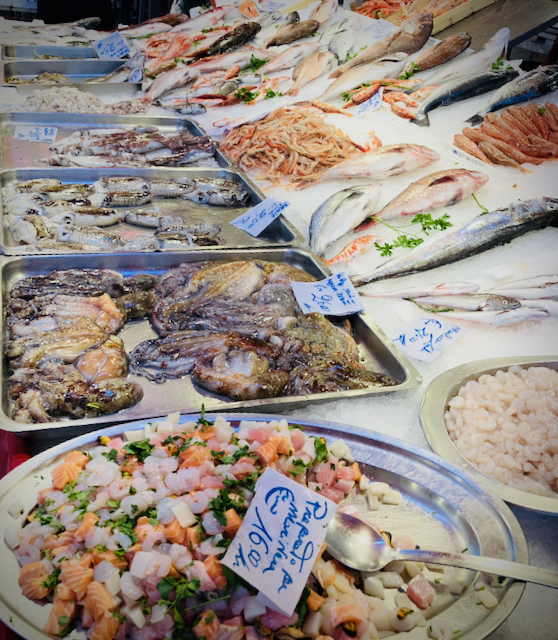
Moving forward, the Normans show up, followed later by the House of Hohenstaufen; a family of German origin who became very confused about their heritage and tried to be Italian – that’s a problem. A couple centuries later the French get involved, things move to messy; there’s the War of the Sicilian Vespers, and eventually the Crown of Aragon arrives to tidy things up.
That works for a while… until someone decides Palermo needs the Spanish Inquisition. Which, historically speaking, was about as relaxing as a tax audit with torches.
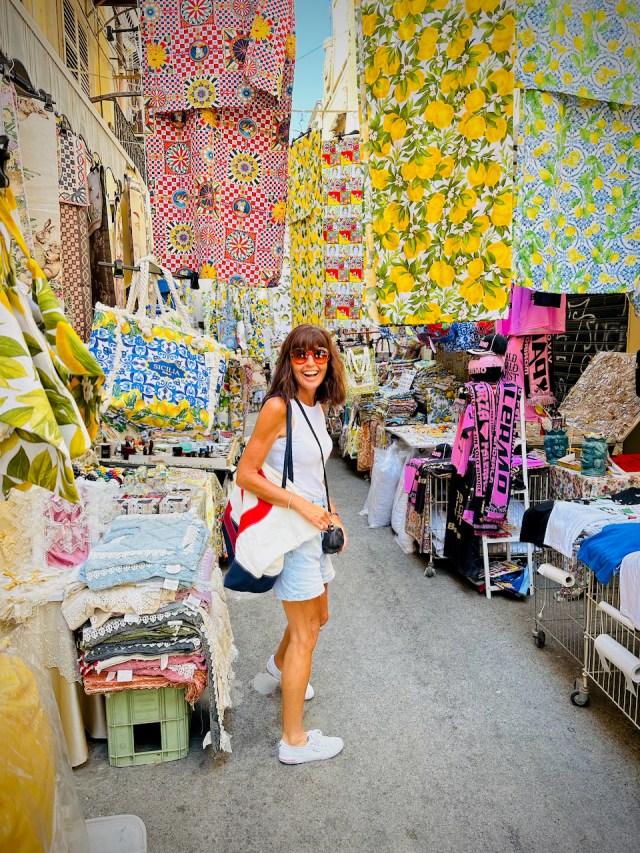
After that Sicily changes hands more times than a poker chip — the House of Savoy, the Habsburg monarchy, and eventually the House of Bourbon. Then in 1860, along rides Giuseppe Garibaldi with his famous Redshirts, folds Sicily into the new Kingdom of Italy, and this is when Palermo officially joins the Italian story. The city rolls through the years — including the era of Benito Mussolini — and eventually lands in the modern Italian Republic after World War II.
So, Palermo’s had Phoenicians, Romans, Byzantines, Arabs, Normans, Germans, French, Spanish, Austrians, Italians…. Honestly the place has changed management more times than a beach bar in Ibiza.
And yet somehow it works. Because today, Palermo is magnificent. Beautiful buildings, incredible restaurants, and street markets where the food smells so good you’ll start ordering things you can’t pronounce.
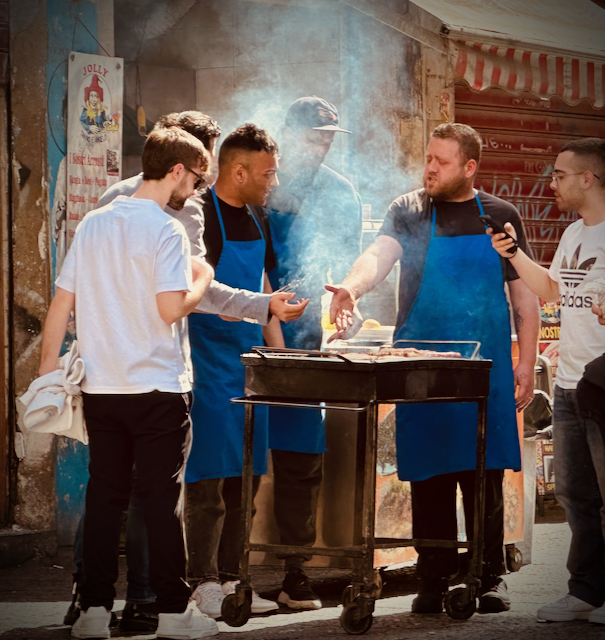
The only catch? Word’s gotten out. When we were there in early May the streets were already full of tourists following someone holding a little flag like it’s a slow-moving parade. Which makes you wonder what July must look like.
Probably history repeating itself… Just with cruise ships instead of invading armies.
I digress, let’s move on…
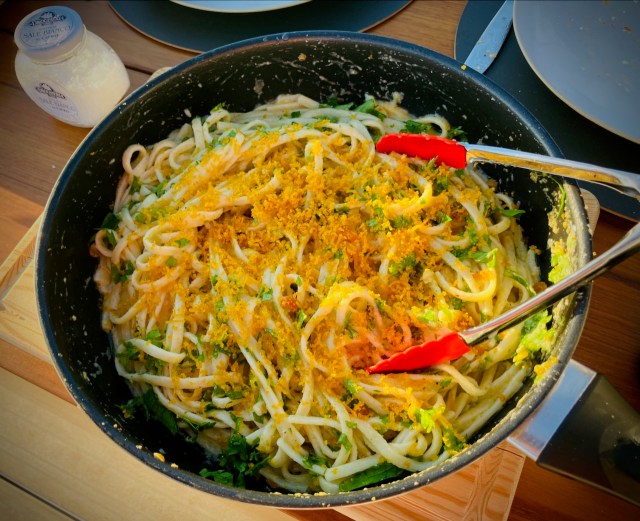
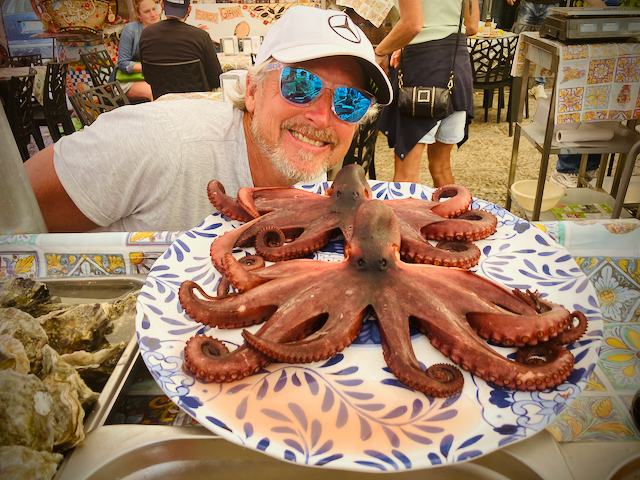
Before we head to the Aeolian Islands, a word about the pasta from Sardina and Sicily. It’s fucking magnificent. I mean even the dried pasta you buy from the artisan stores to put on the boat. There is no comparison to the cardboard like pretenders you buy in other parts of the world (New Zealand is particularly bad…). It has flavour, texture; you can actually cook it al dente like a pro. So yep, we stocked up the boat and made the most epic simple pasta dishes on COCO using incredible jars of Italian chili paste, spice mixes from the markets, beautiful tomatoes and garlic with fresh herbs sprinkled to garnish, and a shaving of Parmesan. Delizioso.
Aeolian Islands (Isole Eolie) → Seven Beautiful Sisters
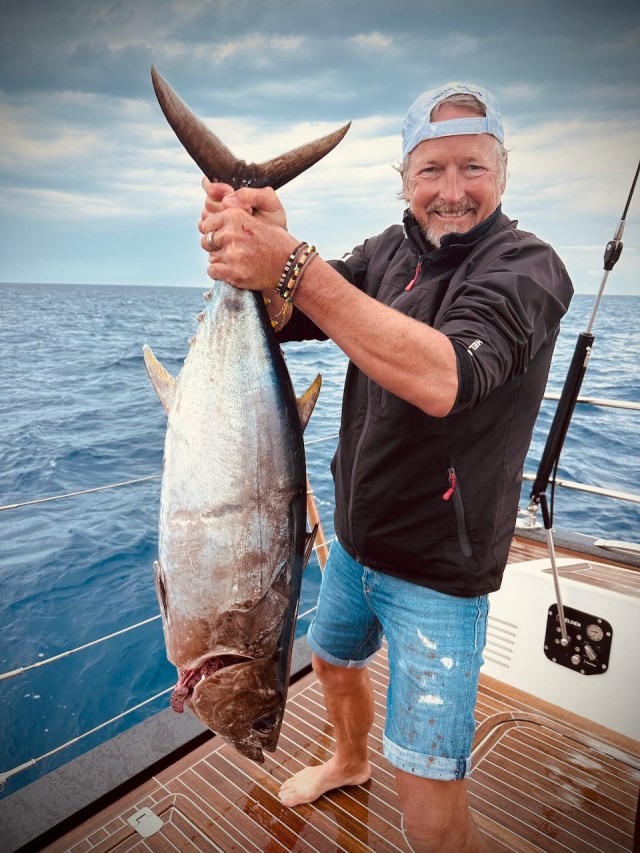
Okay, enough of the history garbage, I hope you learnt something. Let’s get onto more exciting things, the Aeolian Islands, a day’s sail just northeast of Sicily; one of my favourite parts of Italy to date. And we caught a whopping tuna on the way across! That took us about a week to eat… Can I have a smaller one next time please?
The nature of the wonderful “seven sisters”, as the Aeolian Islands are sometimes called, facing the north-eastern coast of Sicily is wild and volcanic. According to mythology, Aeolus, the God of the Winds, lived here, and Ulysses landed on these islands and met the monstrous Polyphemus and his companions, legendary forgers working for Vulcano, the God of the Fire, who was thought to live on the Island bearing the same name.
The Aeolian Islands were submarine volcanoes which emerged from the sea around 700.000 years ago in the following order: Panarea, Filicudi, Alicudi, Salina, Lipari, Vulcano and lastly Stromboli, which is probably 40.000 years old.
Over the years, mining for pumice and obsidian has been a big deal, and wine was a focus until the vine disease Phylloxera hit, which destroyed many vineyards, but they still produce the famous “Malvasia” wine along with the capers and raisins gown on the volcanic slopes (and the capers are amazing). Tourism is big now, so try and get there in the off-season; we were there in April; quiet but delightful.
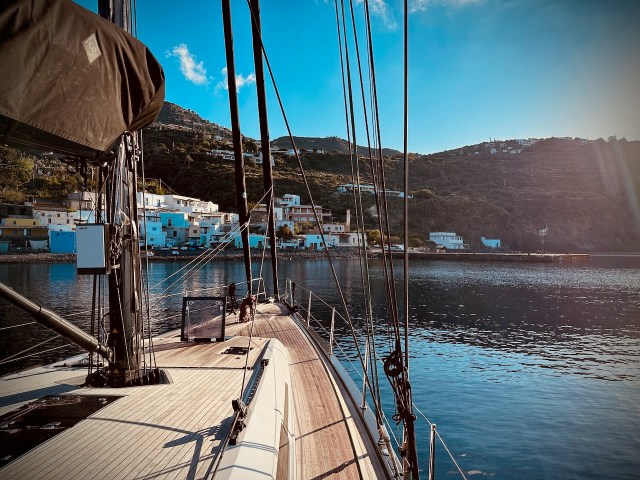
Okay, maybe quiet is a bit of an overstatement; “sleepy” is probably a better description at this time of the year. But we like that. We sailed straight past the first Island, Alicudi (just after catching the aforementioned large tuna) primarily because it was blowing quite a bit from the northeast and the anchorages on Alicudi are marginal, so we headed for the protected southwest coast of Filicudi where there are some great mooring buoys for rent. There’s a very small village with a bar and rudimentary restaurant, and we managed to track down Giusi who will take you for a bit of a tour of the island, a hike, and best of all, back to her place for a local home cooked lunch! A perfect way to spend the day.
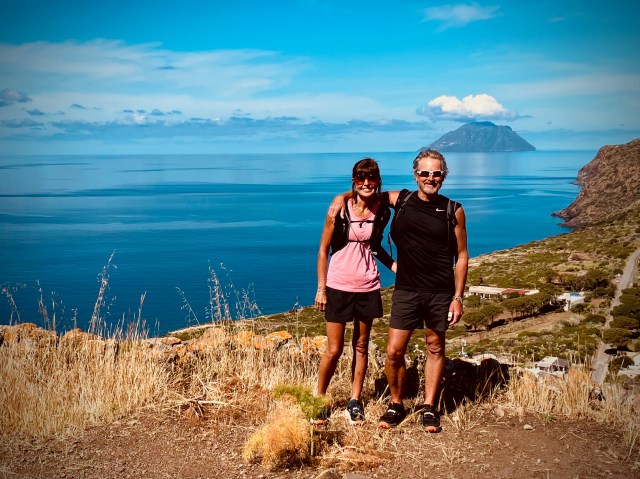
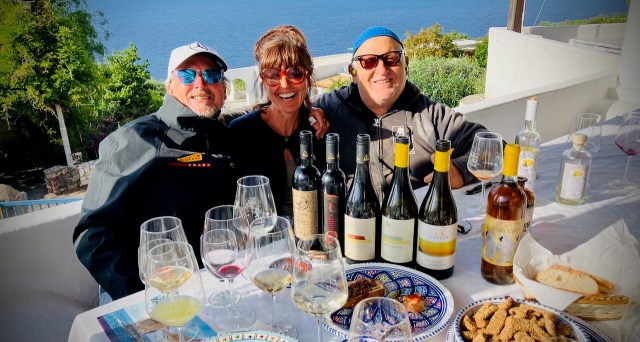
After a couple of days hanging out on Filicudi, we headed to the marina at Isola di Salina (which we pretty much had to ourselves) for a few days to explore the next island in the group. First stop – Fenech Vineyards for some wine tasting and late lunch. The guy that runs the place, Francesco is a real character, great food, great wine; left a little worse for wear with several cases of his wine in tow (god knows where I’m going to store them on the boat…). And of course, because there are a couple of volcanic peaks on the island, my wife couldn’t leave without hiking them (both of them). So we hired a car, found them and walked, pretty much vertically. Lovely views, but I reckon you can see the same thing from an aeroplane.
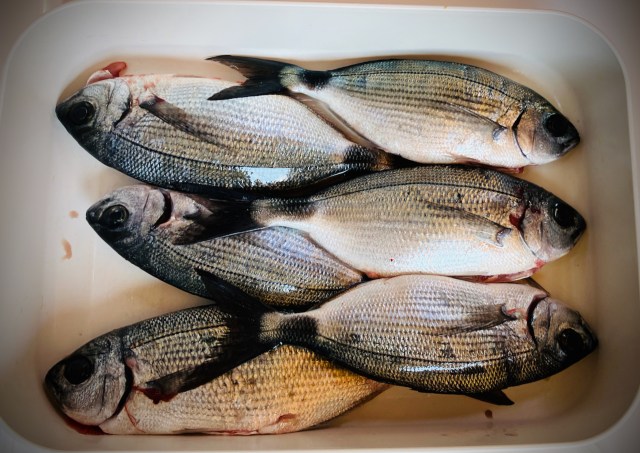
Next stop, Lipari, and found daylight robbery is alive and well in the Aeolian! As we rounded southern tip of Lipari, we were hailed by a local fishing boat; excitement coursed through my veins; local caught, fresh fish for dinner! We engage, he holds up half a dozen shiny but smallish Sea Bream, I nod enthusiastically, he cleans them, hands them across the void to eagerly waiting hands on COCO, then demands 50 euros! For god’s sake, I could pick them up in any market for 15 euros…. However, they were baked that evening and tasted delicious. Mildly robbed, but happy.
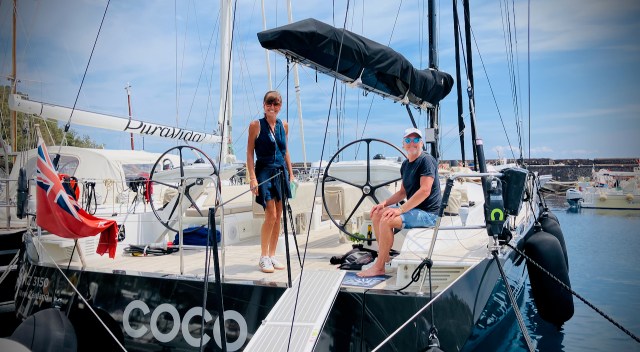
After being fleeced, we slid into a berth on Lipari at Marina di Porto Pignataro, which was a good thing because there we a bunch of thunderstorms predicated to come through. And it rained, and thundered, a lot. But a great place to be stuck for a few days. Lipari is cute! Some great little restaurants, and bars, a bunch of history, so to fill the time in, we ate, had a few wines, and found an awesome little restaurant in the hills that did cooking courses. We departed feeling very Italian.
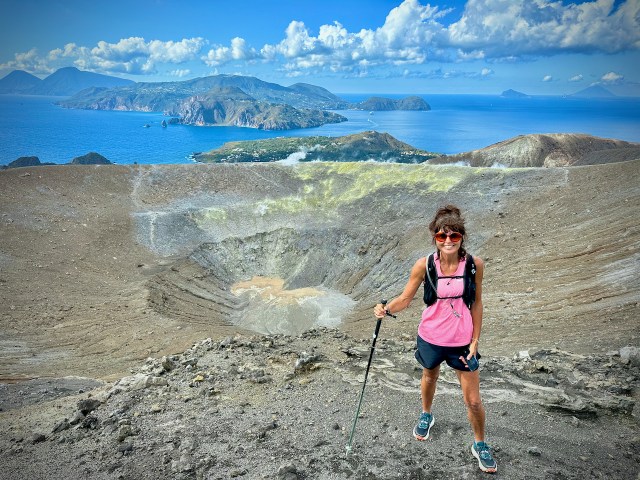
Volcano is the next island just a few miles south of Lipari, and yes, it’s kinda an actual volcano; not erupting or anything that extreme, but anchored in the bay under the hill, there was definitely some activity and a lingering smell of sulphur in the air. There’s an excellent hike up to the crater with amazing views around the island.
Having caught the volcano bug, it was our moment to head up to the most northern of the Aeolian islands; Stromboli. And yes, this one actually erupts! A lot… Health and safety be damned, you can hike up and watch the lava exploding out of the mountain. It’s a reasonable climb, about 900 metres up to the viewing point. Perfect to watch the sunset then as the daylight recedes; the lava glows red as it extracts itself from the bowls of Hades kitchen. The anchorage is interesting, it’s deep and so the mooring buoys are really the only option. And pretty exposed on the northeast corner of the island. So settled weather is a must. And take a broom. We were picking pieces of volcanic grit off the deck for weeks after two nights on the mooring; a parting gift from Stromboli… (and a trip up the mast to rinse it out of the mainsail track).
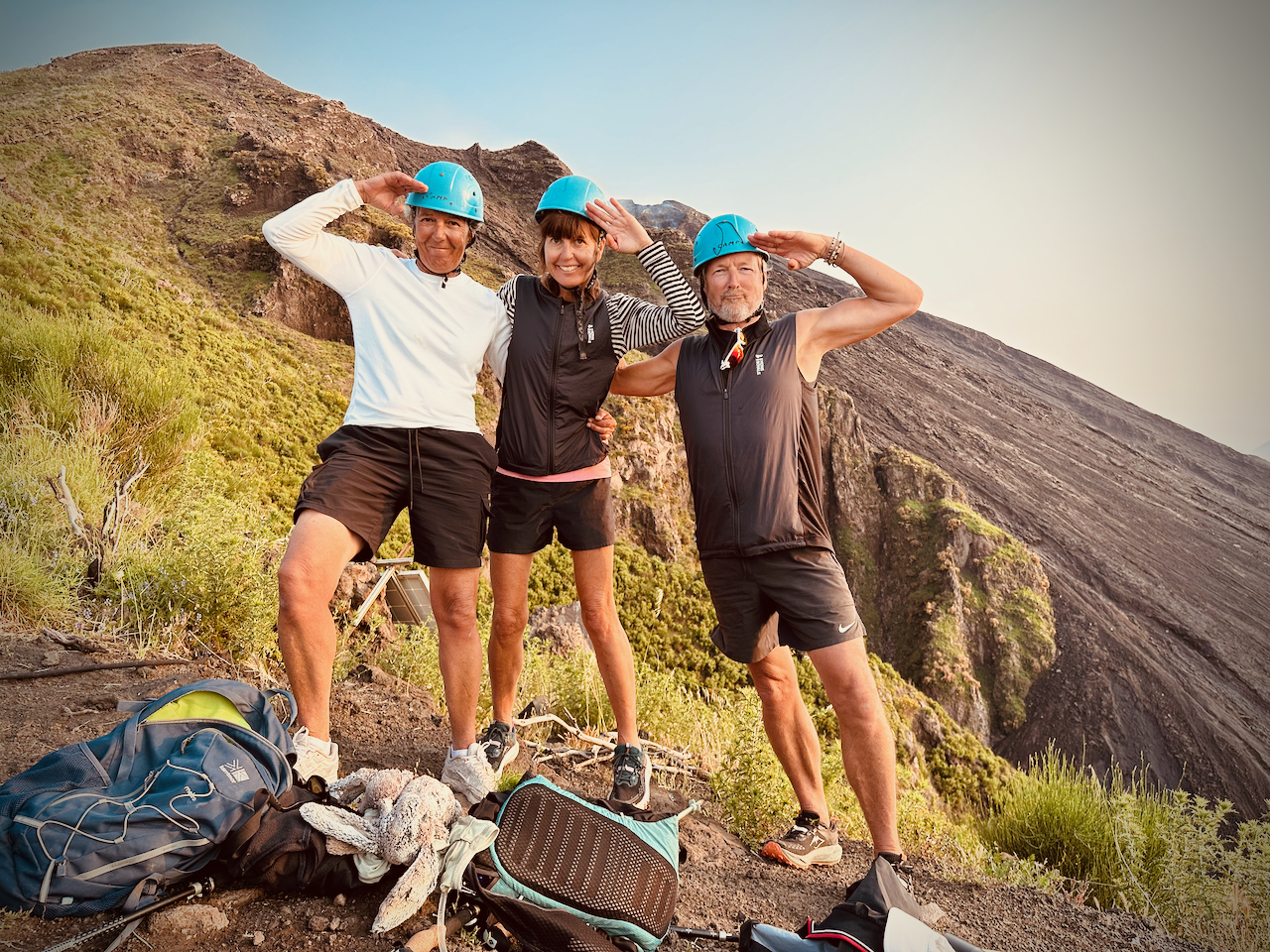
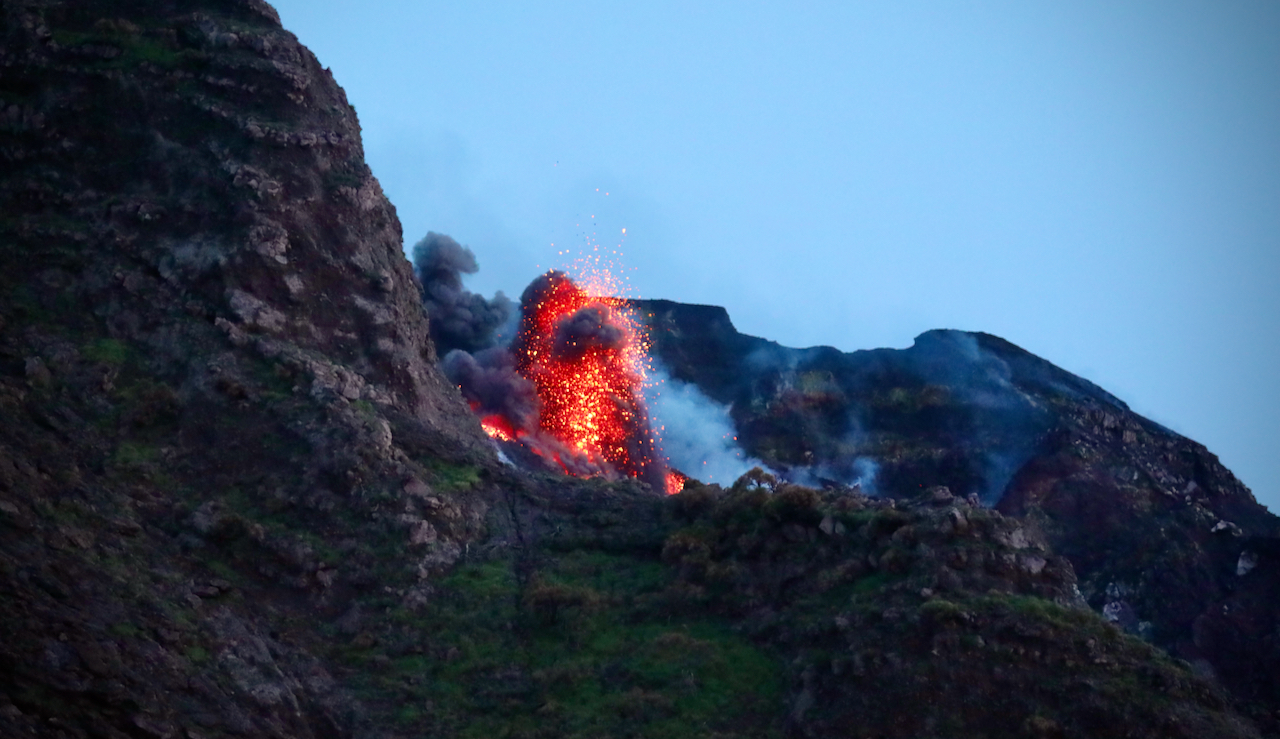
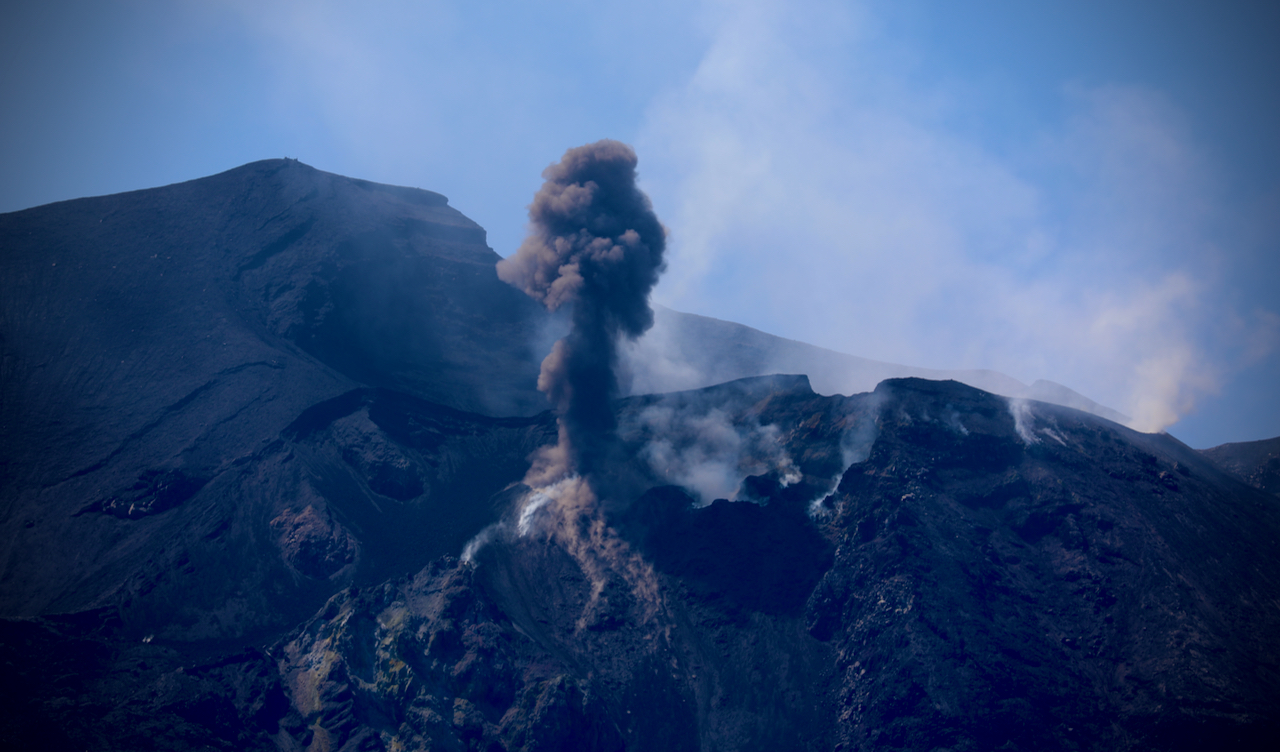
Our final stop in the Sicilian region was Milazzo, on the north eastern corner of the main island; a good transit point before the Messina Strait and of course, a long Italian lunch.
The Strait of Messina → Mythical Monsters & Addio Italia
Ah, the Strait of Messina — that skinny strip of water between Sicily and mainland Italy where geography, mythology, and mild chaos have been roommates for about 3 million years.
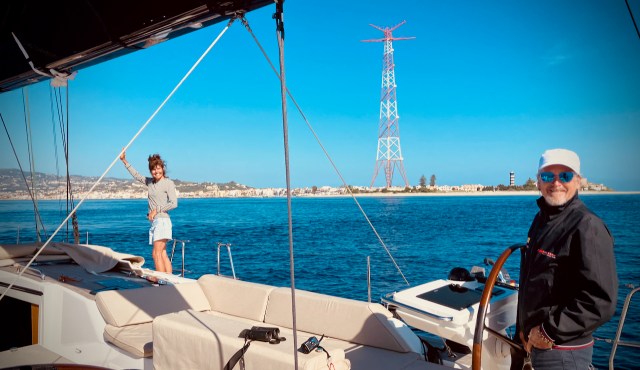
You got this skinny little stretch of water sitting between Messina and Reggio Calabria. Only about three kilometres wide. Close enough to wave at your cousin across the water… but just far enough to make you think twice about swimming it after lunch.
Back in the day, the Greeks rolled up and said, “Nice view. Needs monsters.” So they put Scylla on one side — all teeth and temperament — and Charybdis on the other — big ol’ whirlpool energy.
You sail too close left? You’re lunch. Too close right? You’re a cautionary tale and the straits of Messina presented a “rock and a hard place” for ancient sailors
Even Odysseus had to slide through there like, “I didn’t sign up for this,” but he made it. Barely. That’s the Strait for you — doesn’t care how epic you are.
Then the Romans showed up. They didn’t see monsters. They saw real estate.
Control that little ribbon of water? You control the Mediterranean’s traffic jam. So everybody fought over it. Greeks, Romans, Normans — whole lotta people saying, “This narrow thing? Yep, that’s mine.”
History lesson: If it’s small but strategic, humans will absolutely argue about it for 2,000 years (It still goes on today, read the news…)
And then there’s the bridge that keeps almost happening. Now here’s the real slow-burn romance. For over a century Italy’s been sayin’, “We’re gonna build a bridge across it.” Never mind that it’s thought the Romans, built a floating bridge in 251 BC to transport elephants from Sicily. What’s wrong with the Italians today?
And the Strait just smiles like, “Sure you are.” The bridge plan’s been announced, cancelled, resurrected — more comebacks than a rock band on its farewell tour. Meanwhile, the ferries are out there like, “Y’all done yet? We got this.”
What it Really is; it’s dramatic water. Fast currents. Mirages that make cities float in the sky. Sunsets that make you rethink your life choices.
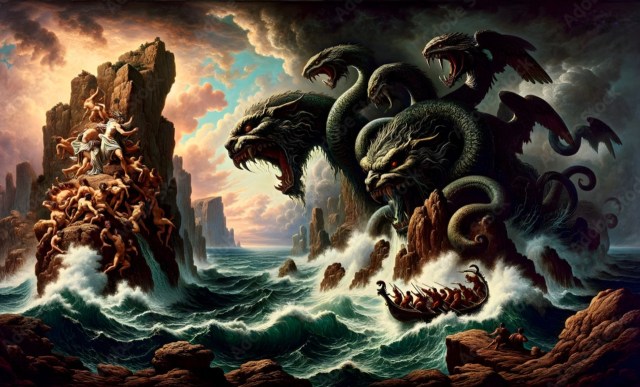
No confirmed sea monsters lately — but you still feel like something ancient’s watchin’. Sometimes the narrowest places in the world, they hold the widest stories.
As for us? We picked the tide right (and there’s a lot of tide – we were motoring along at 14 knots; sailing is a no-no in the strait), the day was perfect, didn’t encounter any monsters, and generally had a lovely passage!
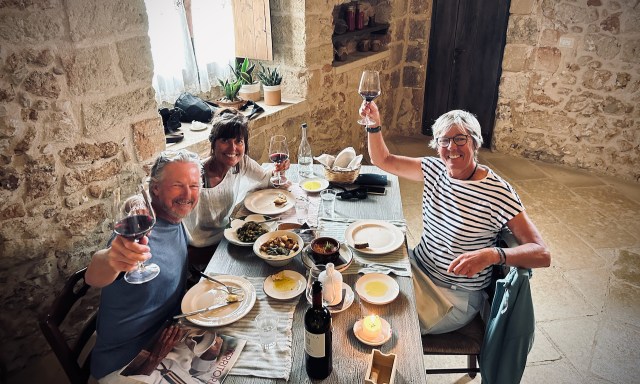
Our final stop in Italy was at Santa Maria de Leuca, after 26 hours on the move – a lovely wee port town on the “heel” of Italy where we spent a few days enjoying the last of our Italian leg. The wind was forecast to come up for a couple of days (seems to be a lot of this I know – spring in the Med I guess), so this was the perfect spot to hide. And enjoy it we did! We found a couple of lovely, and very local restaurants in the port town, and one particular place of yumminess that is worth a visit; about an hour’s drive from Santa Maria de Leuca was Restaurant Le Stanzie with a traditional olive farm including a real old school olive oil press near the small town of Supersano. Oh my Italian gods; delicious.
The perfect place to check out of Italy and enjoy my imaginary Italian roots. Alessandro Tiramisu at his best.
The next two parts of our Mediterranean Odyssey:
 Sailing Yacht Coco
Pingback: COCO does the Mediterranean: Part Two | Sailing Yacht Coco
Pingback: COCO does the Mediterranean: Part Three | Sailing Yacht Coco